

Queues that actually dispatch.
Queues and tasks over gRPC and JSON, with HTTP dispatch, retries and enforced rate limits.
Backed by: CloudBurrow CloudBurrow
Get startedWhat it covers
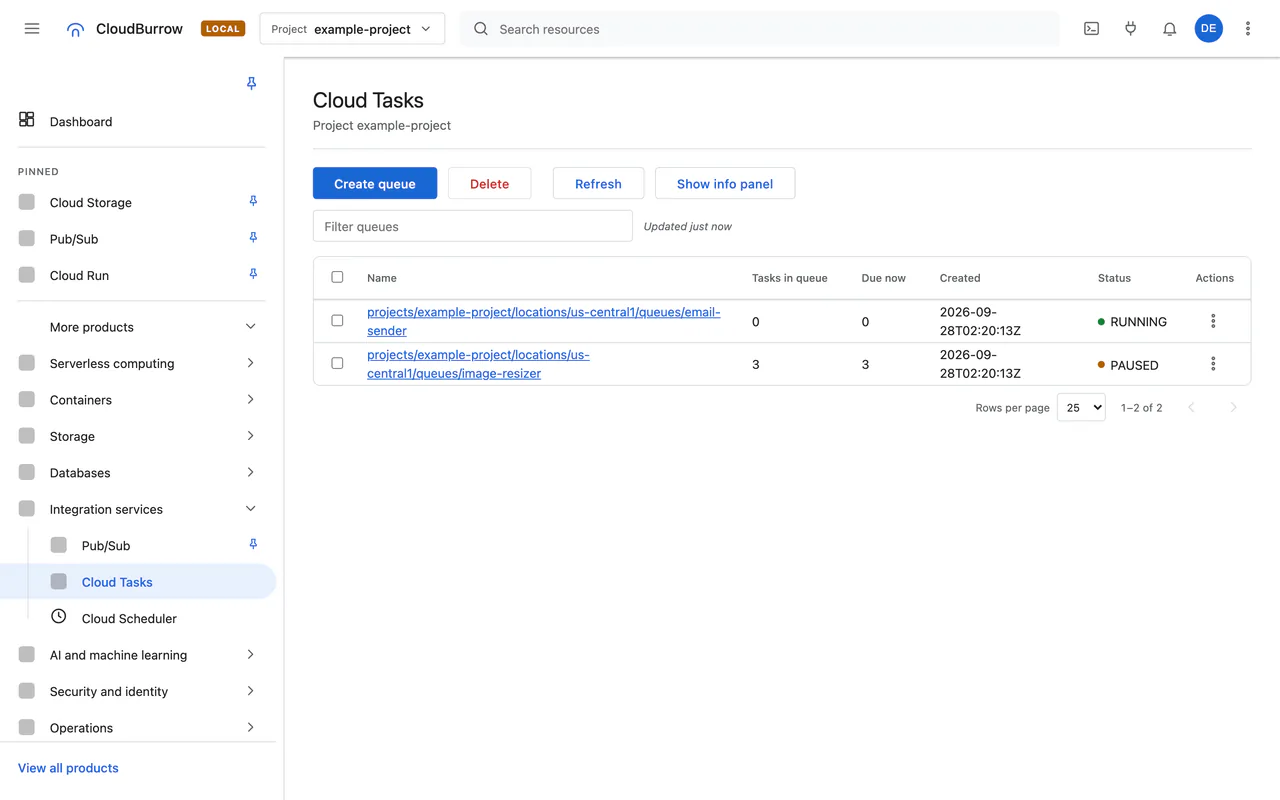
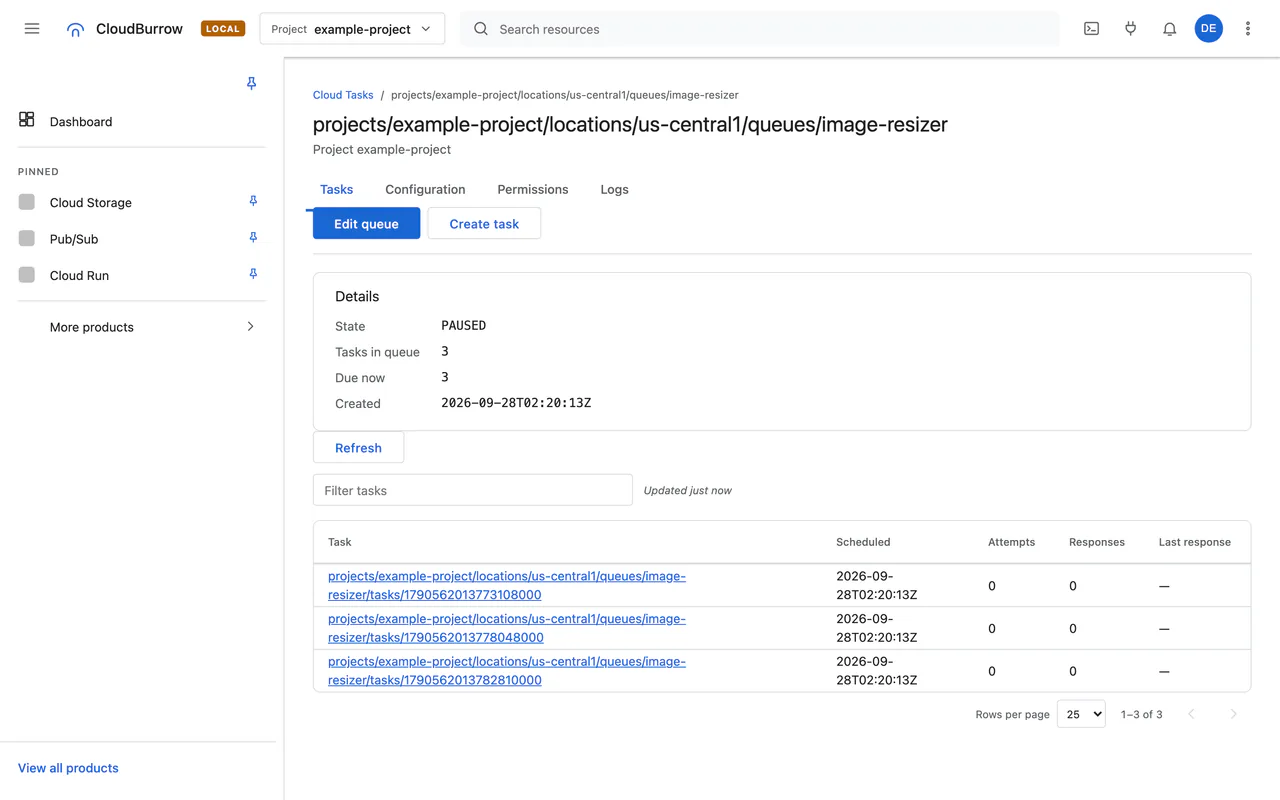
Cloud Tasks is built by CloudBurrow, because Google publishes no emulator for it. Tasks are dispatched to HTTP targets with retry, and queue rate limits are enforced. Fields it would otherwise drop are refused with the field named.
In the console
Tested snippet
From docs/examples/ at main 0ea2594. CI runs these blocks against CloudBurrow.
import os, uuid, grpc
from google.cloud import tasks_v2
from google.cloud.tasks_v2.services.cloud_tasks.transports import CloudTasksGrpcTransport

channel = grpc.insecure_channel(os.environ["CLOUDBURROW_TASKS_ENDPOINT"])
client = tasks_v2.CloudTasksClient(transport=CloudTasksGrpcTransport(channel=channel))

parent = f"projects/{os.environ['GOOGLE_CLOUD_PROJECT']}/locations/us-central1"
queue = client.create_queue(parent=parent, queue={"name": f"{parent}/queues/example-{uuid.uuid4().hex[:12]}"})
assert client.get_queue(name=queue.name).name == queue.name
client.delete_queue(name=queue.name)
This block is run by CloudBurrow's Python suite in CI. If it stops working, CI fails. docs/examples/python.md
import assert from 'node:assert/strict';
import { randomUUID } from 'node:crypto';
import { CloudTasksClient } from '@google-cloud/tasks';
import { grpc } from 'google-gax';

const endpoint = new URL(`http://${process.env.CLOUDBURROW_TASKS_ENDPOINT}`);
const client = new CloudTasksClient({
  apiEndpoint: endpoint.hostname,
  port: Number(endpoint.port),
  sslCreds: grpc.credentials.createInsecure(),
});

const parent = `projects/${process.env.GOOGLE_CLOUD_PROJECT}/locations/us-central1`;
const [queue] = await client.createQueue({ parent, queue: { name: `${parent}/queues/example-${randomUUID()}` } });
const [got] = await client.getQueue({ name: queue.name });
assert.equal(got.name, queue.name);
await client.deleteQueue({ name: queue.name });
await client.close();
This block is run by CloudBurrow's Node.js suite in CI. If it stops working, CI fails. docs/examples/node.md
What's verified
Follow the operation matrix to see what the backend serves and the tests linked to Verified calls.
Not supported
- 01 / Local boundary
The OIDC and OAuth tokens are local fixtures and do not grant Google Cloud access. #1243
- 02 / Local boundary
Without
--appengine-url, every App Engine task attempt fails. #1447
Source: docs/compatibility.md at main 0ea2594.
Questions
Do tasks carry OIDC tokens?
oidcToken or oauthToken reaches its target with Authorization: Bearer and a token minted locally, signed with the instance's own key. v0.1.0 refused these fields.Build against Google Cloud APIs, locally
Free and open source under Apache-2.0. No account, no sign-up, no Google Cloud bill.